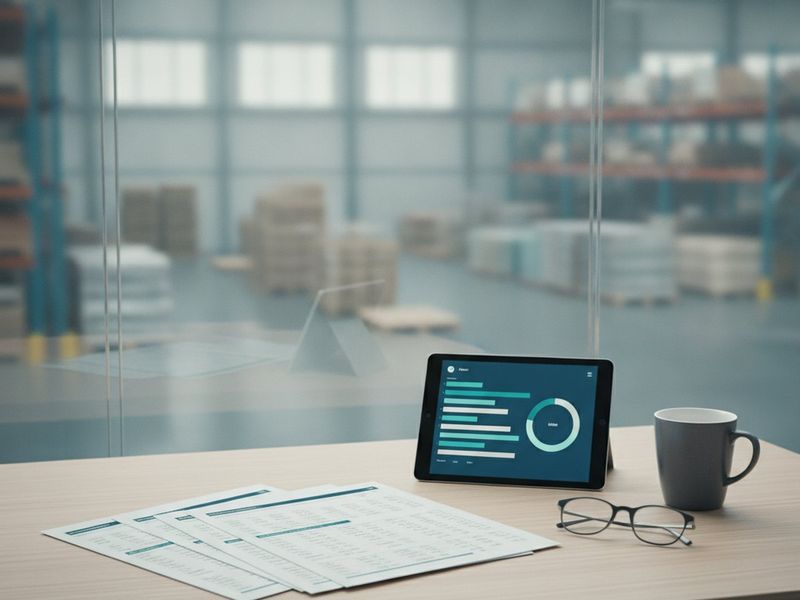
Danzinger & Co. provides 3PL accounting, bookkeeping and tax services for fulfillment centers and warehouses across New York — from Rockland and Westchester to the five boroughs and Long Island. We reconcile your WMS activity to every client invoice, separate postage pass-throughs from real revenue, handle New York sales tax on storage, and show you margin by client.
Tap a client to watch their orders flow. Amber is work done on the floor that never reached an invoice.
What Are 3PL Accounting Services?
The questions New York fulfillment owners ask us most, answered in plain English. Swipe through.
What is 3PL accounting?
3PL accounting is bookkeeping and tax built around a fulfillment business: every receipt, pallet-day, pick, pack, kit and return captured from the WMS and billed at each client’s contract rate; storage recognized over time and handling per order; postage and carrier charges tracked as pass-throughs; labor measured per order; and New York sales tax applied to the storage services that require it.
Done right, it tells you what every client really earns you after labor and space, and what you will owe New York at the end of each quarter.
How is it different from regular bookkeeping?
A typical service business sends one invoice for one job. A 3PL bills dozens of clients for thousands of small activities a month, at different rates, with minimums, long-term storage tiers and accessorials, and rebills carrier charges that arrive on a different schedule. The inventory on your floor is not yours, but the labor to move it is.
Each of those needs its own process, which is why a generic template leaves a warehouse’s books drifting from the WMS within a month.
How should a 3PL recognize revenue?
By what was delivered and when. Storage is earned day by day across the month, so a quarter billed in advance is deferred until it is used. Receiving, pick and pack and kitting are earned when the work is done, even if the invoice goes out two weeks later. Postage you pass through is not your revenue at all.
We set the rules once per contract, so your monthly statements show earned revenue and unbilled work, not just what happened to be invoiced.
How do I know my true cost per order?
Start with direct labor by activity, add packaging, then allocate rent, equipment and supervision across the orders and pallets that used them. Compare that to what each client is billed per order and per pallet-day, and you have margin by client, which is the number that should decide renewals and pricing.
Most 3PLs that measure it for the first time find one or two accounts that have never covered their labor.
When should a 3PL hire a CPA?
Before you sign your first anchor client contract, before you take a second building, and before a client asks for audited numbers. Each of those locks in decisions on entity, revenue recognition, sales tax and financing that are expensive to unwind later.
A CPA who works with New York fulfillment companies will also flag local specifics, from NYC commercial rent tax on a Manhattan or Brooklyn lease to the MCTMT on downstate payroll.
Many Warehouses Ship All Day and Still Leak Money on Every Invoice — Don’t Be One of Them
Fulfillment runs on small charges at high volume. Thousands of picks, pallet-days and returns a month across dozens of clients, each on its own rate card; carrier bills that arrive weeks later; inventory on your floor that belongs to someone else. Your WMS dashboard shows orders shipped. It does not show profit.
When all of that is booked from whatever happened to be invoiced, work goes unbilled, postage masquerades as revenue, storage gets taxed wrong, and weekly payroll collides with net-45 receivables. These are the four problems we see most often in fulfillment companies across Rockland, Westchester, the five boroughs and Long Island.
Challenge 01
1,140 orders picked. 1,062 invoiced. Where did 78 go?
Challenge 02
$212,000 billed. $130,000 of it was the carrier’s.
Challenge 03
Storage is a taxable service in New York.
Challenge 04
Busy every day. Overdrawn every other Friday.
01
Work you did and never billed
Receiving, relabeling, kitting, returns processing and long-term storage happen on the floor and never make it onto the invoice. Surveys put more than 80% of warehouses in that position, and on 3PL margins a 2% billing leak is closer to a 20% hit to profit.
02
Postage that looks like revenue
Carrier charges you rebill to clients inflate the top line, arrive weeks after the shipment, and rarely match what was invoiced. Book them as sales and your revenue, margin and tax numbers are all wrong at once.
03
Sales tax on storage you didn’t collect
New York taxes storage of tangible property, at the rate where you take possession, and counts pull charges, warehouse labor and pickup as part of the taxable receipt. Get one line item wrong and every invoice carries the same mistake until an audit.
04
Weekly payroll, net-45 clients
Labor, rent and carrier bills are due now; client invoices are paid in 30 to 45 days, if they aren’t disputed. Without a cost per order and a cash forecast, a record month can still end with a payroll scramble.
How We Help 3PL and Fulfillment Businesses in New York
Billing Every Touch and Knowing Your Cost per Order Is the Difference Between Busy and Profitable.
Danzinger & Co. is a New City, NY CPA firm that keeps the books for third-party logistics providers, fulfillment centers and public warehouses. We build your 3PL accounting the way a warehouse actually runs — receive, store, pick, pack, ship, invoice, collect — so every activity ties to an invoice and every decision starts from margin by client, not orders shipped.
Here’s what we do for you:
Reconcile WMS activity to invoices
Reconcile every receipt, pallet-day, pick, pack, kit and return in your WMS to what each client was invoiced. Activity counts are matched to contract rates, minimums and long-term storage tiers each billing cycle, so the work you did is the work you billed.
Capture every accessorial
Capture accessorial charges such as relabeling, returns processing, special projects and rush handling before they leak. The small charges that never reach the invoice are the ones that decide a 3PL’s margin. We build the checklist into month-end.
Separate postage pass-throughs
Track postage and carrier charges billed to clients as pass-throughs, reconciled to carrier invoices, not as revenue. Shipping billed and shipping paid are matched line by line, so revenue is real revenue and surcharge gaps are billed back.
Handle New York sales tax on storage
Register, collect, file and remit New York sales tax on storage and the handling charges that go with it. Certificate of Authority, taxable vs. non-taxable invoice lines, the right jurisdiction rate and quarterly ST-100 filings handled from the first pallet.
Measure labor cost per order
Measure direct labor and packaging per order and per pallet, and compare it to what each client pays. Payroll is coded by activity and client, so you see cost per pick, per pallet-day and per return, not one blended warehouse number.
Build a P&L for every client
Produce a profit and loss view for each client and a consolidated statement for the company. Revenue, labor, space and pass-throughs are coded to the client they belong to, so renewals and pricing start from margin.
Forecast cash around net-45 clients
Forecast cash so weekly payroll, rent and carrier bills never collide with 30- and 45-day client receivables. A rolling forecast built on your AR aging and payroll calendar, with disputed invoices flagged before they become a cash problem.
File New York State & City returns
Handle New York State and City filings, MCTMT, commercial rent tax and the entity returns behind your operation. Corporate, partnership and LLC returns, quarterly estimates, NYC filings and the compliance calendar for every registration.
Tap a card to read more
Why Choose Danzinger & Co. for Your 3PL Accounting
We know New York warehousing
TB-ST-340 storage rules, the fulfillment-services exemption your out-of-state clients ask about, NYC commercial rent tax, MCTMT on downstate payroll: we handle these for fulfillment companies every week.
You talk to a senior accountant
No junior hand-offs. The person who understands your cost per order is the person who answers when you call.
Flat, predictable pricing
You know the cost before the work starts, and it doesn’t jump because you signed a fourth client.
Stop Guessing Which Client Makes Money. Call Us First.
One conversation is usually enough to see where unbilled work, postage and sales tax are eating your margin. Call (347) 410-1839 or send us a note below.
Yes. New York treats storage of tangible personal property as a taxable service, taxed at the rate in effect where you take possession of the goods, not where the racking sits. Pull charges, warehouse labor and pickup or delivery you provide are part of the taxable receipt. Storage delivered to a purchaser outside New York, and freight a client contracts separately with a carrier, are not taxed. We set up your invoice lines so each charge is treated correctly.
How should a 3PL account for postage and carrier charges it bills to clients?
Separately from service revenue. When you simply pass a carrier’s charge through, it is not your sale, and booking it as revenue overstates your top line and distorts margin. We track shipping billed against carrier invoices as a pass-through, reconcile the two every month, and flag the difference, which is often where unbilled surcharges and residential fees are hiding.
How do I stop revenue leakage from unbilled warehouse work?
Reconcile activity to invoices, every billing cycle. Your WMS records every receipt, pallet-day, pick, kit and return; we match those counts to what each client was actually invoiced under their contract rates and minimums. The gap is your leakage, and closing it is usually the fastest margin gain a 3PL can make.
Do my out-of-state clients get New York nexus because their inventory is in my warehouse?
Not from your warehouse alone. New York’s fulfillment-services exemption means a seller whose only connection to the state is using a New York fulfillment provider is not treated as a New York vendor. But a client whose New York sales pass $500,000 and 100 transactions in the prior four quarters has economic nexus regardless. We can walk your clients through it, which is a selling point when they choose a warehouse.
We want to hear from you!
Tell us how many clients you fulfill for and what your WMS is, and we’ll show you what a client-level P&L looks like. Fill out the form and a senior accountant will reply within one business day.
“The best firm I’ve ever used! The team at Danzinger & Co are all experts — knowledgeable and approachable.”
SW
Shymon WarszawskiGoogle review
“Always had good service with Danzinger & Co! Moshe has been consistent, reliable, honest and kind throughout the years.”