Real Estate Accounting Services in New York

Danzinger & Co. is a real estate CPA firm providing real estate accounting, bookkeeping and tax services for property owners, investors and property managers across New York. We keep books at the property level, handle real estate tax planning, including cost segregation and 1031 exchange planning, structure entities for each holding, and produce the reporting your investors and lenders expect.

Rent collected$0
Expenses paid$0
Security deposits held$0
Net operating income$0

What Are Real Estate Accounting Services?

The questions New York owners and investors ask us most about real estate accounting, answered in plain English. Swipe through.

What is real estate accounting?

Real estate accounting is the practice of tracking income, expenses, assets and debt for property you own or manage — at the property level, not just the company level. It covers rent collection, operating expenses, capital improvements, depreciation, loan balances and the reporting owners, partners and lenders rely on.

Done right, it tells you what each building earns after every cost, and what you’ll owe in tax at the end of the year.


A real estate accountant’s desk with a ledger, rent roll and apartment keys

How is it different from regular business bookkeeping?

A typical business has one set of books and one income stream. A real estate business has a building, a mortgage and often an entity behind every address. Depreciation runs for 27.5 or 39 years, security deposits are liabilities rather than income, and capital improvements are treated differently from repairs.

Each of those rules changes the tax you pay, so accounting for real estate requires a chart of accounts built for property, not a retail template.

Brass apartment mailboxes in a New York lobby with rent envelopes

Do I need separate books for each property?

Yes — or at minimum a separate class or location for each one. Property-level books show which buildings are earning their keep, keep partner distributions and 1031 basis calculations clean, and make lender reporting simple when you refinance.

If every property currently runs through one bank account, we untangle it and set up a structure you can actually maintain.

Three file folders, each with its own set of property keys

How does depreciation work on rental property?

The IRS lets you deduct the cost of a building (not the land) over 27.5 years for residential and 39 years for commercial property. A cost segregation study breaks that cost into components — roofing, flooring, fixtures, site work — that can be written off over 5, 7 or 15 years instead.

That moves large deductions into the early years of ownership, when cash matters most.

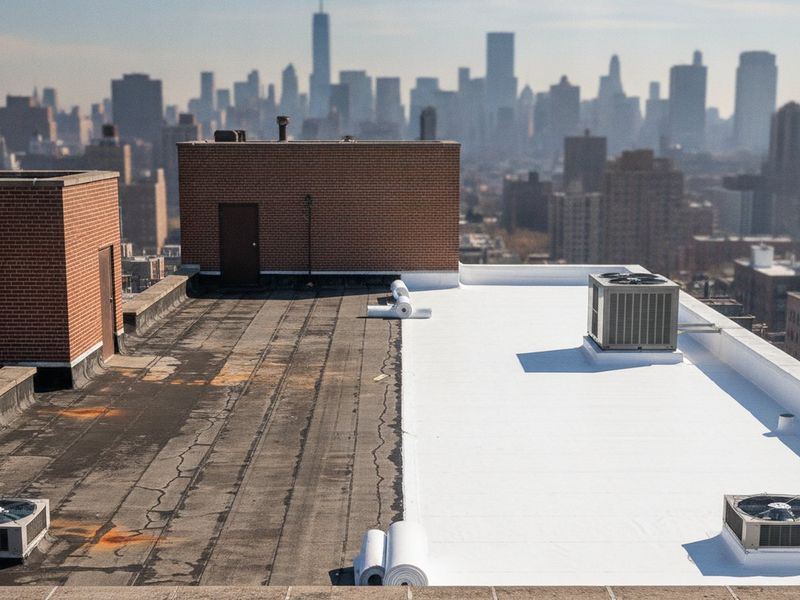
A New York rooftop with a newly installed roof membrane and HVAC units

When should a real estate investor hire a real estate CPA?

Before the second property, before a 1031 exchange, and before you bring in outside partners. Those are the moments when entity choice, basis tracking and reporting decisions become expensive to undo.

A real estate accountant or CPA who works with New York real estate will also flag local issues — transfer taxes, mortgage recording tax, abatement compliance — that a general accountant may miss.

A real estate investor and an accountant reviewing figures at a window over Manhattan

Many Real Estate Businesses Overpay Tax Because of Poor Property Accounting — Don’t Be One of Them

Real estate is one of the few industries where the accounting is harder than the operations. Every property has its own income, its own expenses, its own security deposits and often its own entity. Depreciation schedules run for decades, and a single mistimed exchange can erase a year of returns.

When those pieces are tracked in one general ledger, you lose sight of which building is carrying the others, you miss deductions you were entitled to, and your partners and lenders start asking questions you can’t answer quickly. These are the four problems we see most often across Rockland, Westchester and the five boroughs.

Books that mix properties together
Challenge 01
Which building is actually making money?
Depreciation left on the table
Challenge 02
Deductions deferred for 27 years
Exchange deadlines that don't move
Challenge 03
45 days to identify. 180 to close.
Reporting investors don't trust
Challenge 04
Numbers that change every quarter
01

Books that mix properties together

Property management accounting depends on keeping each building’s income and costs separate. When several buildings run through one set of books, you can’t see which property actually earns and which one quietly loses money every month.

02

Depreciation left on the table

Without a cost segregation study and real estate tax planning, most owners depreciate the entire building over 27.5 or 39 years and defer deductions they could be taking now.

03

Exchange deadlines that don’t move

A 1031 exchange gives you 45 days to identify a replacement and 180 to close. Miss either window and the entire gain becomes taxable.

04

Reporting investors don’t trust

Partners and lenders expect consistent statements. Spreadsheets rebuilt from scratch each quarter invite exactly the questions you don’t want.

How We Help Real Estate Businesses in New York

Property-Level Accounting Is the Key to a Profitable Portfolio.

Danzinger & Co. is a New City, NY CPA firm that has kept the books for landlords, developers, syndicators and property managers for more than a decade. We build your books around the way you actually own property — one building, one entity, one set of numbers — so every decision starts from facts.

Here’s what we do for you:

  • Keep property-level books

    Keep property-level books

    Set up and maintain property-level books for every building, unit and entity you own. Each property gets its own set of books mapped to a real estate chart of accounts, so you see income, expenses and equity per building and the consolidated view when you need it.

  • Track rent & expenses per unit

    Track rent & expenses per unit

    Track rental income, operating expenses and capital improvements per property. Rent, late fees, utilities, repairs and management fees are coded to the property and unit they belong to. Capital improvements are separated from repairs so they land on the right schedule at tax time.

  • Reconcile security deposits

    Reconcile security deposits

    Reconcile tenant security deposits per unit so every dollar held is accounted for. Deposits sit in their own account and tie to a per-unit ledger: who paid, how much, when, and what is owed back. We reconcile it monthly so a move-out never becomes a scramble.

  • Run depreciation & cost segregation

    Run depreciation & cost segregation

    Prepare depreciation schedules and coordinate cost segregation studies. We maintain the fixed-asset register for every property, run the 27.5- and 39-year schedules, and bring in an engineering-based cost segregation study when the numbers justify it.

  • Plan 1031 exchanges

    Plan 1031 exchanges

    Plan 1031 exchanges around the 45-day identification and 180-day closing deadlines. Before you list, we model the gain, confirm the qualified intermediary is in place and calendar both windows so the exchange holds up under review.

  • Structure an entity per property

    Structure an entity per property

    Structure LLCs and partnerships so each property carries its own liability and tax profile. Holding companies, operating LLCs and partnerships set up to match how you own, with the intercompany bookkeeping and K-1s to go with them.

  • Report to investors & lenders

    Report to investors & lenders

    Produce monthly, quarterly and annual statements your investors and lenders can rely on. Per-property and consolidated financials, rent rolls, debt-service coverage and distribution schedules in the format your partners and banks expect.

  • File New York State & City returns

    File New York State & City returns

    Handle New York State and City filings, transfer taxes and abatement compliance. Transfer taxes, mortgage recording tax, RPIE statements, abatement paperwork and the state and city returns for every entity, all run from one filing calendar.

Hover over a card to read moreTap a card to read more

Who We Serve

Our accounting services for real estate are built around how each type of owner earns, spends and reports.

Real estate investors. Our accounting for real estate investors keeps every property’s income, expenses, basis and loan balance separate, so you know your return by building and can plan around depreciation, 1031 exchanges and partner distributions.

Developers. Accounting for real estate developers means tracking construction costs, draws and carrying costs against each project budget, then moving cleanly from development to depreciation once a property is placed in service.

Property managers. Property management accounting requires keeping owner funds, security deposits and operating accounts separate, producing owner statements, and reconciling every trust account.

Landlords and syndicators. Multiple entities, outside partners and lender covenants call for consistent reporting, clean capital accounts and distributions that tie to the books.

Beyond Bookkeeping: Real Estate Tax Services, Planning and CFO Support

Clean books are the starting point. The tax savings come from what you do with them, and one team seeing the whole picture keeps the accounting and the tax strategy from working against each other.

Our accounting services cover monthly property-level bookkeeping, reconciliations and investor-ready financial statements. Our real estate tax services handle entity returns, partner reporting and New York State and City filings for your holdings.

Good real estate tax planning happens before a purchase, a sale or an exchange, not after. That means timing cost segregation, structuring 1031 exchanges, and choosing the right entity for each property. As your portfolio grows, our CFO services add forecasting, budgeting and lender-ready analysis by property.

How It Works

  1. 01

    Strategy call. Tell us about your portfolio: how many properties, how they’re owned, and what you’re planning next. We’ll show you where your books and tax position may be costing you.

  2. 02

    Setup and cleanup. We separate your properties, bring past periods current, and build a chart of accounts and entity structure you can maintain.

  3. 03

    Monthly reporting and planning. You receive property-level financials, and a senior accountant walks you through what changed and which tax moves to consider before year-end.

Why Choose Danzinger & Co. for Your Real Estate Accounting

We know New York property tax

Rockland, Westchester and the five boroughs each handle assessments and abatements differently. We work across all of them.

You talk to a senior accountant

No junior hand-offs. The person who knows your portfolio is the person who answers when you call.

Flat, predictable pricing

You know the cost before the work starts, and it doesn’t jump because you bought another building.

Stop Guessing Which Property Makes Money. Call Us First.

One conversation is usually enough to see where your books are costing you. Call (347) 410-1839 or send us a note below.

Book a Strategy Call

Real Estate Accounting FAQ

How should I keep records of tenant security deposits?

Tenant security deposits should be tracked separately from operating income and clearly tied to each tenant and property. In New York, security deposit rules may require deposits to be held in a New York bank account, and certain buildings must use interest-bearing accounts, so accurate records are important for compliance and proper reporting.

What is a cost segregation study, and is it worth it?

A cost segregation study reviews a real estate property and identifies components that may qualify for shorter depreciation periods. It may be worth it for property owners who want to accelerate depreciation deductions and improve cash flow, but the benefit depends on the property type, cost basis, holding period, and tax situation.

Can you help with a 1031 exchange already in progress?

Danzinger & Co. provides real estate accounting and tax support that includes 1031 exchange planning. If your exchange is already in progress, our team can review where things stand, help with the accounting and tax reporting, and coordinate with your other advisors where appropriate.

Do you work with out-of-state investors who own New York property?

Yes. Danzinger & Co. works with investors who live outside New York but own rental, commercial, or investment property in the state. We can help organize property-level accounting, income and expense tracking, tax-ready financials, and reporting needed for New York tax compliance.

We want to hear from you!

Tell us about your portfolio and we’ll show you what property-level reporting looks like. Fill out the form and a senior accountant will reply within one business day.

“Knowledgeable, trustworthy, and extremely detail-oriented. A pleasure to work with.”

NL
Nathan LangLang Realty

“A client of Danzinger & Co for over a decade and could not be happier! Professional, responsive, absolute experts.”

SP
Shalom PinsonGroup Rentals
5.0 ★★★★★Read reviews
Inquiry received! We'll be in touch shortly to schedule your free consultation.