Danzinger & Co. provides retail accounting, bookkeeping and tax services for stores across New York — boutiques, specialty shops, grocers and multi-location retailers in Rockland, Westchester and the five boroughs. We reconcile POS to bank every day, track inventory and shrink at cost, file New York sales tax correctly, and give you a P&L for every location.
The questions New York store owners ask us most, answered in plain English. Swipe through.
What is retail accounting?
Retail accounting is bookkeeping and tax built around a store: daily point-of-sale closes reconciled to the bank, inventory carried at cost and counted against sales to find shrink, sales tax collected and remitted item by item, gift cards held as liabilities, and a profit and loss statement for each location.
Done right, it tells you the true margin of every department and every store, and what you will owe New York at the end of each quarter.
How is it different from regular bookkeeping?
A service business sends an invoice and gets paid. A store rings hundreds of small sales a day across cash, cards, gift cards and returns, gets paid in batches net of processor fees, and carries thousands of dollars of inventory that can walk out the door or go out of season.
Each of those needs its own process, which is why a generic template leaves a store’s books drifting from its bank within weeks.
How should I value inventory in my store?
At what it cost you to put it on the shelf, tracked by department or SKU and counted on a schedule. The retail inventory method estimates cost from selling price and markup; a perpetual system in your POS tracks it unit by unit. Either way, the count is what turns a guess into a number.
We reconcile counts to the books, book shrink where it belongs, and flag dead stock before it ties up another season of cash.
What sales tax does a New York store have to collect?
You register for a Certificate of Authority before your first sale, collect the combined state and local rate on taxable items, and file a return, usually quarterly on Form ST-100 due the 20th of the month after the quarter ends. Clothing and footwear under $110 per item are exempt from the state tax, and exempt entirely in New York City.
The rate, the exemption and the filing frequency all depend on where you sell and how much you collect. We set it up once and keep it right.
When should a retailer hire a CPA?
Before you sign your second lease, before you add ecommerce to the store, and before your first sales tax audit letter. Each of those changes what you owe, how you should structure the business, and what your lender wants to see.
A CPA who works with New York retailers will also flag local specifics, from the $110 clothing rule to New York City’s commercial rent tax for larger Manhattan storefronts.
Many Stores Ring Sales All Day and Still Don’t Know Their Margin — Don’t Be One of Them
Retail runs on small numbers at high volume. Hundreds of transactions a day across cash, cards and gift cards, paid out in batches net of fees; inventory bought months ahead and counted rarely; sales tax that changes by item and by county. Your POS dashboard shows revenue. It does not show profit.
When all of that is booked from bank deposits alone, revenue is understated, shrink hides inside cost of goods, a mis-mapped department collects the wrong tax on every sale, and three stores share one blurry P&L. These are the four problems we see most often in stores across Rockland, Westchester and the five boroughs.
Challenge 01
$3,212 rung. $3,104 deposited. Where did $108 go?
Challenge 02
Shrink and dead stock, hiding in gross margin.
Challenge 03
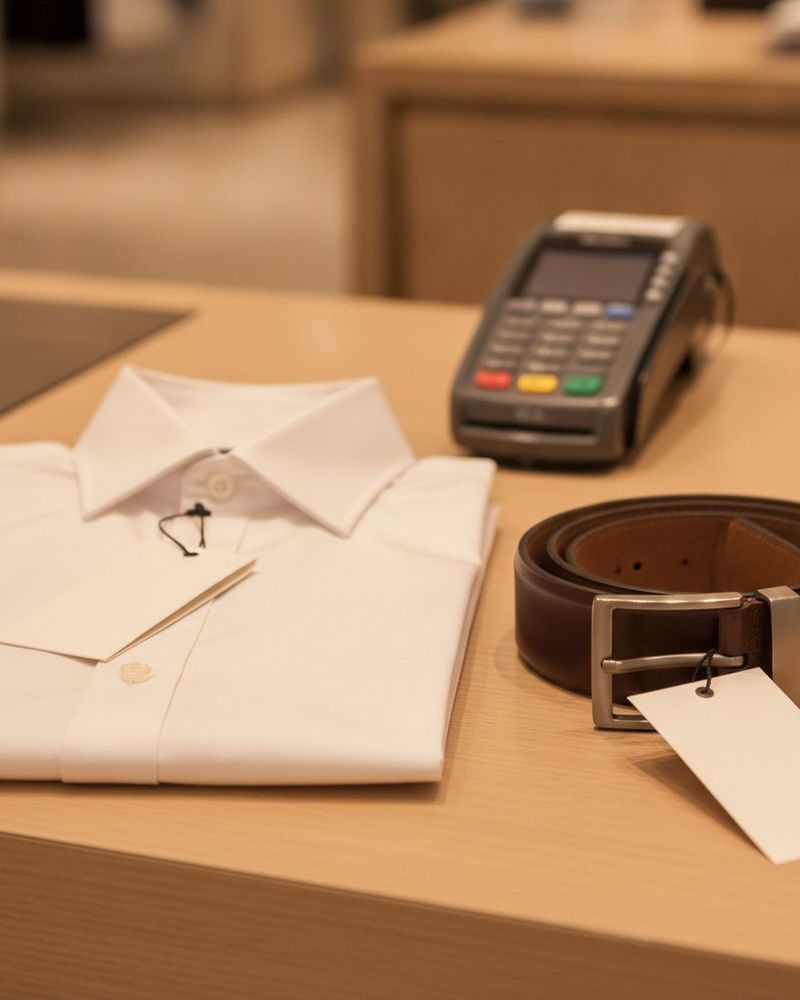
Under $110, the shirt is exempt. The belt isn’t.
Challenge 04
Which location actually carries the others?
01
Register says one number, bank says another
Card processor fees, tips, refunds, cash-drawer variances and next-day batches all sit between the POS report and the bank. Book the deposit as sales and your revenue, fees and cash are wrong at once.
02
Inventory you can’t see the value of
Without counts tied to cost, shrink, damaged goods and slow movers blend into cost of goods. Margin looks fine on paper until the year-end count writes off a quarter’s profit.
03
Sales tax on the wrong items
New York exempts clothing and footwear under $110 per item from state tax, and NYC exempts it entirely. Map one department wrong in the POS and every sale is over- or under-collected until an audit notices.
04
Three stores, one blurry P&L
Rent, payroll and inventory land in one set of books, so a strong flagship hides a location that has never made money. Decisions about leases, staffing and a fourth store get made on averages.
How We Help Retail Businesses in New York
Daily Reconciliation and Real Margins Are the Difference Between Busy and Profitable.
Danzinger & Co. is a New City, NY CPA firm that keeps the books for boutiques, specialty stores, grocers and multi-location retailers. We build your retail accounting the way a store actually runs — POS close, deposit, inventory count, sales tax return, location P&L — so every number ties out and every decision starts from margin, not register totals.
Here’s what we do for you:
Reconcile POS to bank daily
Reconcile every point-of-sale close to card batches, cash deposits, fees, tips and refunds. Each day’s Z-report is matched to what actually landed in the bank, with processor fees and refunds broken out, so sales are sales and variances are caught the same week.
Track inventory & shrink at cost
Track inventory at cost by department, reconcile physical counts and book shrink where it belongs. Counts tie to the books, dead stock is flagged before it costs another season of cash, and gross margin reflects what really sold.
Handle New York sales tax
Register, collect, file and remit New York State and local sales tax, including the $110 clothing and footwear rule. Certificate of Authority, POS tax mapping by department, quarterly ST-100 filings and the NYC exemption handled correctly from the first sale.
Account for gift cards & returns
Account for gift cards, store credit, layaway and returns without overstating revenue. Gift cards sit as a liability until redeemed, breakage is recognized where allowed, and returns net against the right period.
Build a P&L for every location
Produce a profit and loss statement for each store and a consolidated view across the company. Rent, payroll and inventory are coded to the location they belong to, with shared costs allocated on a rule you agree to.
Run payroll & scheduling costs
Run payroll, tips and commissions, and track labor as a percent of sales by store. Payroll tax filings, tip reporting and commission calculations from one ledger, with labor cost measured against each location’s sales.
Plan seasonal cash & buying
Forecast cash around seasonal buys so inventory, rent and tax payments never collide. A rolling forecast built around your buying calendar, so you know what you can commit to a holiday order before the deposit is due.
File New York State & City returns
Handle New York State and City filings, license renewals and the entity returns behind your stores. Corporate, partnership and LLC returns, quarterly estimates, NYC filings and the compliance calendar for every registration.
Tap a card to read more
Why Choose Danzinger & Co. for Your Retail Accounting
We know New York retail
The $110 clothing rule, NYC’s full exemption, quarterly ST-100 filings, Certificate of Authority renewals: we handle these for stores across Rockland, Westchester and the five boroughs every week.
You talk to a senior accountant
No junior hand-offs. The person who understands your margin by department is the person who answers when you call.
Flat, predictable pricing
You know the cost before the work starts, and it doesn’t jump because you opened a second location.
Stop Guessing Which Store Makes Money. Call Us First.
One conversation is usually enough to see where fees, shrink and sales tax are eating your margin. Call (347) 410-1839 or send us a note below.
Each daily POS close is matched to the card batches and cash deposits that follow it, with processor fees, refunds, tips and gift-card redemptions broken out separately. We do this every day, so a missing deposit or a drawer variance is caught the same week, not at year end.
Is clothing taxable in New York?
Clothing and footwear under $110 per item are exempt from the 4% New York State sales tax, and in New York City they are exempt from local tax as well. Items of $110 or more are fully taxable, and accessories, jewelry and most sporting equipment are always taxable. We map your POS departments so the register gets it right on every sale.
How should I account for gift cards and store credit?
A gift card sale is not revenue yet. It is a liability until the card is redeemed, and only then does it become a sale. We track outstanding balances, recognize breakage on cards that will never be used where allowed, and keep the liability tied to your POS report so the balance sheet is right.
Can you produce a profit and loss statement for each location?
Yes. Every store gets its own P&L with its own rent, payroll, inventory and sales, plus a consolidated view. Shared costs are allocated on a rule you agree to, so you can compare locations fairly and decide on leases, staffing and expansion with real numbers.
We want to hear from you!
Tell us what you sell and where, and we’ll show you what a location-level P&L looks like. Fill out the form and a senior accountant will reply within one business day.
“The best firm I’ve ever used! The team at Danzinger & Co are all experts — knowledgeable and approachable.”
SW
Shymon WarszawskiGoogle review
“Always had good service with Danzinger & Co! Moshe has been consistent, reliable, honest and kind throughout the years.”