Appliance Dealer Accounting Services in New York

Danzinger & Co. provides appliance dealer accounting, bookkeeping and tax services for stores across New York — independent showrooms, kitchen and laundry dealers, builder suppliers and sales-and-service shops in Rockland, Westchester, the five boroughs and Long Island. We reconcile every ticket to the bank, track the floor plan unit by unit, book protection plans and manufacturer rebates the way the rules require, collect the right sales tax on delivery and installation, and show you the margin on each unit that leaves the floor.

Ticket #7731 · waiting for the first customer

Sales this week$0
Cost of units$0
Customer deposits$0
Rebates$0
Net margin$0

What Are Appliance Dealer Accounting Services?

The questions New York appliance dealers ask us most, answered in plain English. Swipe through.

What is appliance dealer accounting?

Appliance dealer accounting is bookkeeping and tax built around a showroom: every ticket reconciled to the bank and to the point-of-sale system, the floor plan tracked unit by unit against the lender’s statement, protection plans deferred and earned over their term, manufacturer rebates and co-op credited to the units they belong to, delivery and installation taxed the way New York requires, and margin reported per unit after financing fees.

Done right, it tells you what you actually keep on each refrigerator, range and washer that leaves the floor, and what you will owe the lender, the state and the IRS at the end of the month.
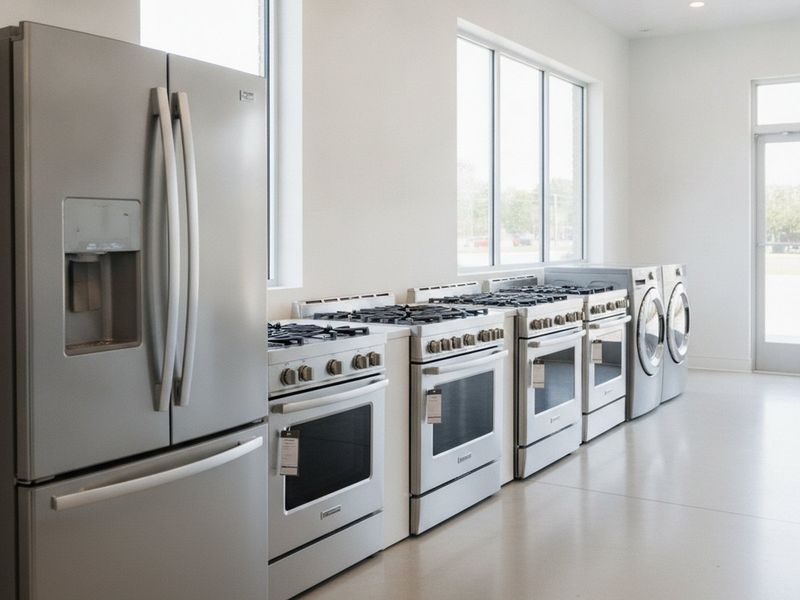
A bright appliance showroom with a row of stainless refrigerators, ranges and a washer-dryer pair under display lighting

How is it different from regular retail bookkeeping?

A boutique buys inventory, sells it and keeps the difference. An appliance dealer sells a $2,199 refrigerator it does not own yet, adds a delivery charge, an installation charge and a five-year protection plan, finances the customer through a promotional plan that costs a merchant fee, collects sales tax on some of those lines and not others, repays the floor plan lender within days, and books a manufacturer rebate on the unit months later.

Each of those lines has its own accounting and its own tax rule, which is why a generic retail template leaves a dealer’s margin wrong on every ticket.

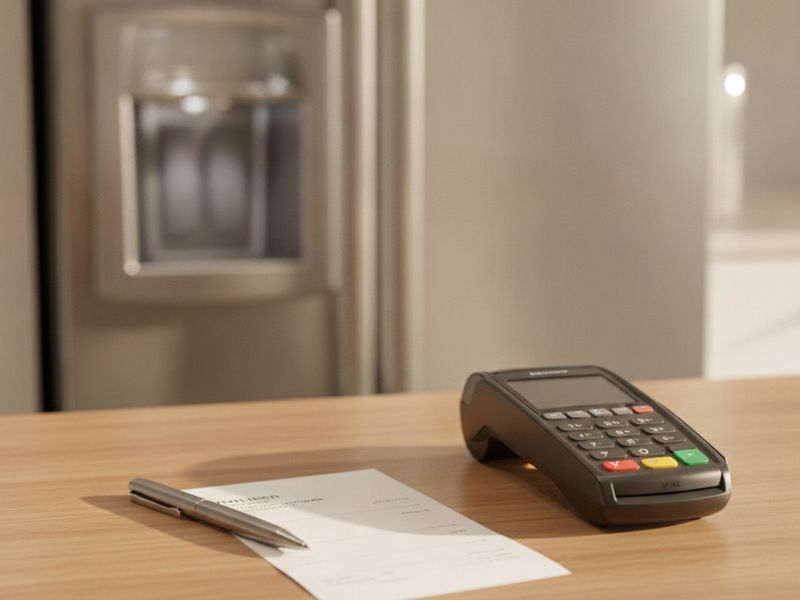
A sales ticket for a refrigerator with delivery, installation and protection plan lines beside a card reader on a showroom counter

What is a floor plan and how do I keep it under control?

A floor plan is the line of credit that pays the manufacturer or distributor for the units on your floor. Each unit gets an advance, a free-floor period with no interest, then interest and scheduled curtailments of 10% to 20% of the advance if it has not sold, and the full advance is due within days once it does. Units that sit past the free period are where the cost hides.

We reconcile the lender’s statement to the serial numbers on your floor every month, age each unit against its free-floor date, and report the interest and curtailments before they land.

A warehouse aisle of boxed appliances on pallets with serial-number labels being scanned

What margin should an appliance store make?

Independent dealers target roughly 30% gross margin on product, with commodity white goods often at 10% to 20% and premium brands at 25% to 40%. Protection plans carry two to five times the margin of the hardware and commonly make up 15% to 35% of a store’s gross profit. Delivery and installation should at least cover the truck and the crew.

We report margin by unit, by category and by line on the ticket every month, after financing fees and after rebates, so you know whether the money is in the appliance, the plan or the delivery.

A dealer and an accountant reviewing a margin-by-category report on a laptop in a showroom office

When should an appliance dealer hire a CPA?

Before you sign a floor plan agreement, before you add a protection plan program or a promotional financing partner, before you open a second showroom or a builder division, and before your first New York sales tax audit. Each of those locks in decisions on liability tracking, revenue recognition and tax collection that are expensive to fix after the fact.

A CPA who works with New York dealers will also flag local specifics, from NYSERDA point-of-sale rebates to the MCTMT on downstate payroll and NYC filings for a showroom in the boroughs.

An appliance store owner and an accountant talking beside a display range in a showroom

Many Appliance Stores Move Units All Day and Still Don’t Know What They Keep — Don’t Be One of Them

A dealer runs on borrowed inventory and a long ticket. Units on the floor that belong to the lender until they sell; a sale that is really five sales — the appliance, delivery, installation, a protection plan and a financing promotion — each with its own tax rule and its own margin; rebates from the manufacturer that arrive months after the unit is gone. Your point-of-sale system shows how much you sold. It does not show what you kept.

When all of that is booked from bank deposits alone, the floor plan ages into interest unnoticed, protection plans are booked as sales, delivery and installation are taxed wrong, and rebates and financing fees land in the wrong month. These are the four problems we see most often in stores across Rockland, Westchester and the five boroughs.

A floor plan you pay for twice
Challenge 01
Sold Tuesday. Paid the lender Friday. Still charged interest.
Protection plans booked as sales
Challenge 02
$249 today. Earned over five years. Taxable now.
Sales tax on the whole ticket
Challenge 03
Appliance taxable. Delivery taxable. Install… it depends.
Rebates and financing that blur the margin
Challenge 04
Sold at $2,199. Kept $1,940. Nobody told the P&L.
01

A floor plan you pay for twice

Most of the inventory on your floor belongs to the lender until it sells. Each unit has its own free-floor window, its own curtailment date and a pay-as-sold clause that expects the advance back within days of the ticket. When the books track inventory as one number, units age past the free period unnoticed and the interest and curtailments arrive as a surprise.

02

Protection plans booked as sales

A protection plan carries two to five times the margin of the appliance it covers, which is why it is the most valuable line on the ticket and the easiest to book wrong. If you are the obligor the price is deferred and earned over the term; if a third-party administrator carries the plan you are an agent and only the commission is revenue. New York taxes the sale of the plan either way.

03

Sales tax on the whole ticket

New York taxes the delivery charge when the item is taxable, taxes the installation of a freestanding washer or refrigerator, and treats a unit that becomes part of the home as a capital improvement only with the right certificate on file. The rate follows the store unless the customer takes delivery in a different county. A ticket built the simple way is under-collecting somewhere.

04

Rebates and financing that blur the margin

Manufacturer volume rebates and co-op reduce the cost of the units, not your revenue, and the credit belongs to inventory until the unit sells. A 12-month promotional financing plan costs the dealer a merchant fee on the same ticket. Booked as they land, the rebate inflates one month and the fee quietly cuts the next, and the true margin on a unit is never on the page.

How We Help Appliance Dealers in New York

A Floor Plan You Can See and a Ticket That Adds Up Are the Difference Between Busy and Profitable.

Danzinger & Co. is a New City, NY CPA firm that keeps the books for independent appliance stores, kitchen and laundry showrooms, builder suppliers and sales-and-service shops. We build your accounting the way a dealer actually runs — unit, ticket, floor plan, plan, delivery, rebate, payroll — so every dollar ties out and every decision starts from what you keep, not what you rang up.

Here’s what we do for you:

  • Reconcile tickets to the bank

    Reconcile tickets to the bank

    Reconcile every sales ticket, deposit, financing settlement and refund from your point-of-sale system to the bank every month. Revenue on the P&L ties to what customers, card processors and financing partners actually paid, line by line.

  • Track the floor plan by unit

    Track the floor plan by unit

    Reconcile the floor plan lender’s statement to the units on your floor and age each one against its free-floor period. Advances, pay-as-sold payoffs, curtailments and interest matched to serial numbers, with units nearing the free period flagged.

  • Book protection plans correctly

    Book protection plans correctly

    Defer protection plan revenue and recognise it over the coverage term, or record only the commission when a third party carries the plan. ASC 606 obligor-versus-agent treatment, a monthly earned-revenue schedule, and the taxable sale of the plan handled on the return.

  • Collect delivery & install sales tax

    Collect delivery & install sales tax

    Apply New York’s rules to delivery charges, freestanding installation and capital-improvement work on every ticket. Store-rate versus delivery-address rate, Form ST-124 on file for capital improvements, and quarterly ST-100 filings.

  • Credit rebates & co-op to the units

    Credit rebates & co-op to the units

    Record manufacturer volume rebates and co-op allowances as a reduction of inventory cost and release them as units sell. ASC 705-20 treatment, advertising reimbursements offset against the ads you ran, and a rebate receivable that is actually collected.

  • Report margin per unit after fees

    Report margin per unit after fees

    Show the margin on each unit, category and ticket line after promotional financing fees and rebates. Appliance, protection plan, delivery and installation margin trended monthly against dealer benchmarks.

  • Run payroll for sales, delivery & service

    Run payroll for sales, delivery & service

    Handle payroll and commissions for showroom staff, delivery crews and service technicians. Commission plans tied to ticket margin, overtime for crews, W-2 versus contractor classification, MCTMT and benefits handled.

  • File New York State & City returns

    File New York State & City returns

    Handle New York State and City filings and the entity returns behind your store. S corporation, LLC or partnership returns, quarterly estimates, NYC filings and the compliance calendar for every registration.

Tap a card to read more

Why Choose Danzinger & Co. for Your Appliance Dealer Accounting

We know New York appliance retail

Floor plan lenders, protection plan administrators, NYSERDA point-of-sale rebates, the delivery and installation rules in Tax Bulletins ST-838 and ST-129, MCTMT on downstate payroll: we handle these for dealers across Rockland, Westchester and the boroughs every month.

You talk to a senior accountant

No junior hand-offs. The person who understands your floor plan statement and your protection plan schedule is the person who answers when you call.

Flat, predictable pricing

You know the cost before the work starts, and it doesn’t jump because you added a delivery truck or a second showroom.

Stop Guessing What Each Unit Makes You. Call Us First.

One conversation is usually enough to see where the floor plan, the protection plans and the sales tax are eating your margin. Call (347) 410-1839 or send us a note below.

Book a Strategy Call

Appliance Dealer Accounting FAQ

How should an appliance dealer account for floor plan financing?

Unit by unit. Each financed appliance is inventory with a matching floor plan liability, its own free-floor window and its own curtailment schedule, and the pay-as-sold clause means the lender is repaid from the sale within days. We reconcile the lender’s statement to the units on the floor every month, flag units approaching the end of their free period, and book interest and curtailments as they accrue, so the floor plan balance on your balance sheet matches the lender’s and no unit ages into interest unnoticed.

Is a protection plan revenue when the customer pays for it?

Only when it is earned. Under ASC 606 a service-type warranty is a separate performance obligation, so if your store is the obligor the plan price is recorded as deferred revenue and recognised evenly over the coverage period. If the plan belongs to a third-party administrator you are acting as their agent and only your commission is revenue. Either way New York treats the sale of the plan as a taxable sale of repair and maintenance services, while repairs performed under it are not taxed and parts bought to service it are exempt.

Do I charge New York sales tax on delivery and installation?

On delivery, yes: when the appliance is taxable the delivery charge on the same bill is taxable too. Installation depends on what you install. Setting up a freestanding washer, dryer or refrigerator is a taxable service; work that becomes a permanent part of the property can qualify as a capital improvement, which is exempt only when the customer gives you a properly completed Form ST-124. The rate is the combined rate at your store, or at the delivery address if the customer takes possession in a different taxing jurisdiction. We set your point-of-sale system up to apply each rule and file the returns.

How do manufacturer rebates, co-op and financing fees affect my margin?

Volume rebates and most vendor allowances reduce the cost of the units, not your revenue, and the credit stays with the units in inventory until they sell, at which point it lowers cost of goods. Co-op that reimburses specific advertising you actually ran offsets that expense instead. Promotional financing costs you a merchant fee on the ticket, typically several percent on a deferred-interest plan and more on a long 0% plan, and that fee is a cost of the sale. We track all three at the unit level so the margin you see on a refrigerator is the margin you kept.

We want to hear from you!

Tell us which brands you carry, who finances your floor and whether you sell your own protection plans, and we’ll show you what a margin-per-unit report looks like. Fill out the form and a senior accountant will reply within one business day.

“Our business isn’t a typical one. We offer several services across different entities, use multiple pricing models, and manage a large international team. Danzinger & Co. took the time to truly understand how we work and built an accounting structure that fits our organization. As a result, our financials accurately reflect our business, with revenue recognized correctly and reports we can confidently rely on when making operational and growth decisions. It’s refreshing to work with an accounting firm that goes beyond bookkeeping and takes the time to understand the business behind the numbers.”

MP
Mendy PelmanOwner, Ultimate UW

“It’s very hard to find a really good accountant. When you do, you never look back.”

YE
Yehuda EckhausGoogle review
5.0 ★★★★★Read reviews
Inquiry received! We'll be in touch shortly to schedule your free consultation.