Dental Accounting Services in New York

Danzinger & Co. provides dental practice accounting, bookkeeping and tax services for dentists across New York — general and specialty practices in Rockland, Westchester, the five boroughs and Long Island. We reconcile production to collections, track every PPO write-off, benchmark your overhead line by line, put controls on the front desk, and handle the PC and PLLC filings behind your practice.

Production$0
Collected$0
PPO write-offs$0
Payroll & overhead$0
Net margin$0

What Are Dental Accounting Services?

The questions New York dentists ask us most, answered in plain English. Swipe through.

What is dental accounting?

Dental accounting is bookkeeping and tax built around a practice: production reconciled to collections, PPO write-offs tracked by plan, overhead benchmarked against dental norms line by line, controls placed around the front desk, equipment purchases planned for the deduction, associate and hygienist pay calculated from the same numbers the books use, and the professional-entity filings New York requires kept current.

Done right, it tells you what you actually keep from each chair, each plan and each provider, and what you will owe at the end of the year.
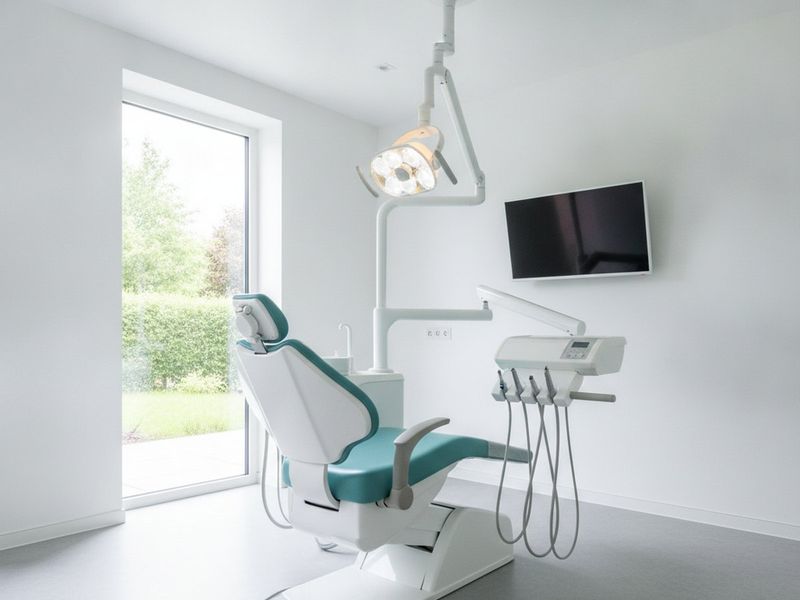
A modern dental operatory with a reclined treatment chair, overhead light and delivery unit

How is it different from regular bookkeeping?

A service business sends an invoice and gets paid. A dental practice completes a procedure at full fee, submits a claim under a contracted PPO rate, collects a patient portion at the desk, waits weeks for the plan to pay a fraction of the fee, and does that dozens of times a day across several plans. The largest expense is people, the second is supplies and lab, and both drift.

Each of those needs its own process, which is why a generic template leaves a practice’s books telling a different story than its bank within a quarter.

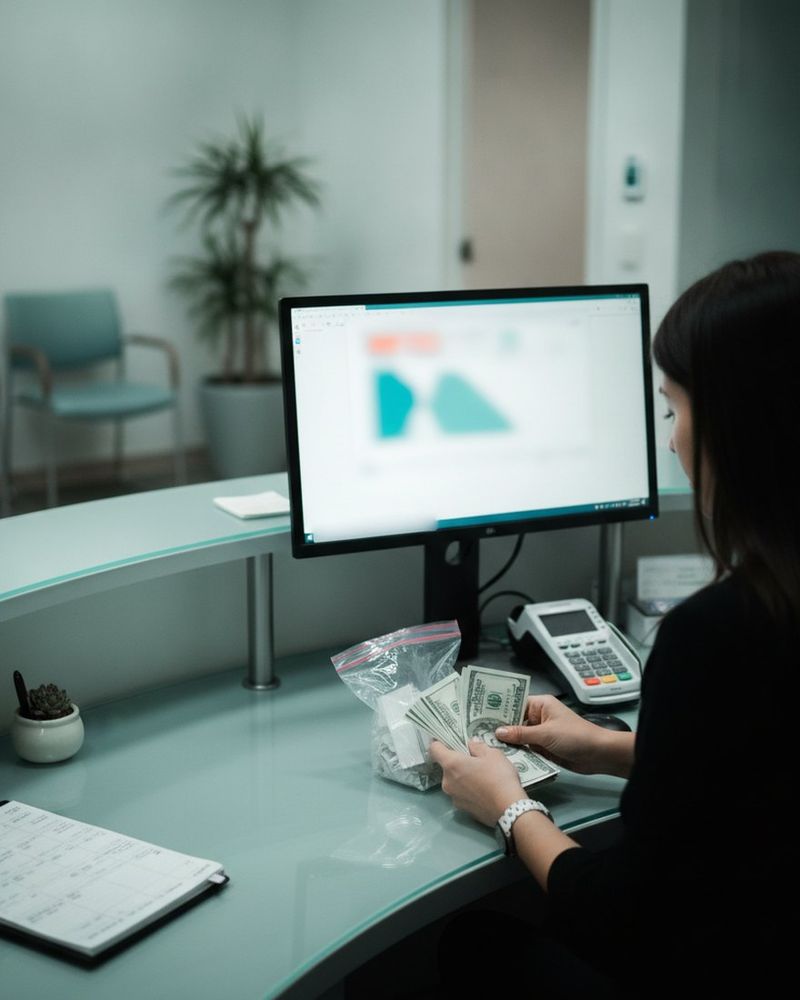
Insurance explanation-of-benefits statements beside a calculator on a dental office manager's desk

Should I track production or collections?

Both, and the gap between them. Production tells you how much dentistry was done; collections tell you how much of it turned into cash. The difference is contractual write-offs, courtesy discounts, patient balances and bad debt, and each of those has a different fix. A healthy practice collects 98% or more of net production and keeps less than 10% of receivables past 90 days.

We report production, adjustments by type and collections together every month, so the owner and the office manager are looking at the same page.

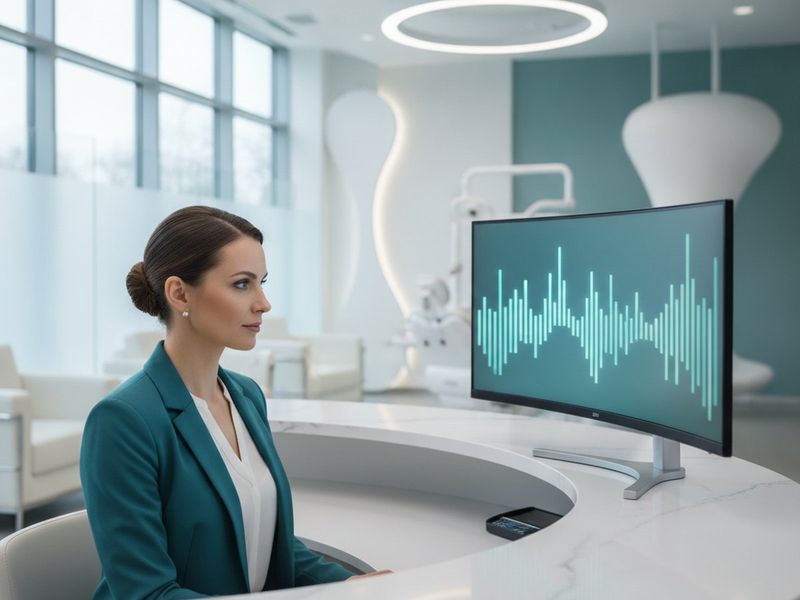
An office manager reviewing a production and collections report on a monitor at the front desk

How much overhead should a dental practice have?

Industry data puts total overhead for a general practice at roughly 59% to 65% of collections, with staff payroll at 25% to 28%, supplies at 5% to 6%, lab fees at 6% to 8% and rent at 6% to 7%. Specialty practices usually run lower. Above 70% is a warning sign.

We benchmark each line of your practice against those ranges every month rather than one average, so you can see whether the problem is supplies, lab, payroll or collections before it costs a year.

A dentist and an accountant reviewing an overhead breakdown chart at a conference table

When should a dentist hire a CPA?

Before you form the entity, before you buy or sell a practice, before you add a partner, an associate or a second office, and before you sign a DSO agreement. Each of those locks in decisions on structure, purchase price allocation, compensation and tax that are expensive to unwind, and New York’s professional-entity rules leave little room for improvisation.

A CPA who works with New York dentists will also flag local specifics, from the MCTMT on downstate payroll to NYC filings for an office in the boroughs.

A dentist in scrubs and an accountant talking in a bright dental office hallway

Many Dental Practices Are Booked Solid and Still Don’t Know What They Keep — Don’t Be One of Them

A practice runs on production and delay. A full schedule at full fee that PPO plans pay at a contracted fraction weeks later; payroll, supplies and lab that are the biggest expenses and drift a point at a time; one front-desk employee who posts payments, adjusts balances and makes the deposit. Your schedule shows how busy you are. It does not show what you take home.

When all of that is booked from bank deposits alone, production never reconciles to collections, overhead creeps past 65% unnoticed, adjustments go unreviewed, and the entity itself may not be what New York allows. These are the four problems we see most often in practices across Rockland, Westchester and the five boroughs.

Production that never becomes collections
Challenge 01
Produced $92,000. Collected $58,000. Where did it go?
Overhead that creeps past 65%
Challenge 02
Supplies up. Lab up. Payroll up. Take-home down.
A front desk with no one watching
Challenge 03
One person posts payments, adjusts balances and makes the deposit.
A structure New York doesn't allow
Challenge 04
An LLC with a non-dentist partner. Now what?
01

Production that never becomes collections

Your schedule shows production at full fee. Your bank shows what PPO plans actually pay, and for participating providers the contractual write-off commonly runs 30% to 45% of gross production. Booked as one adjustment, the gap hides which plans, which procedures and which patient balances are costing you.

02

Overhead that creeps past 65%

A general practice runs at roughly 60% overhead: staff payroll 25% to 28% of collections, supplies 5% to 6%, lab 6% to 8%, rent 6% to 7%. Without those lines benchmarked every month, a supply rep, a lab price increase and a raise each move the number a point, and the owner finds out at tax time.

03

A front desk with no one watching

In an ADA survey 35% of practices had been embezzled at least once and 17% more than once, with the average loss near $105,000. The typical scheme runs through adjustments and write-offs on the practice software, which is exactly what bookkeeping from bank deposits alone will never catch.

04

A structure New York doesn’t allow

New York requires a dental practice to be a professional corporation or PLLC owned entirely by dentists licensed in the state. A non-dentist investor, a DSO agreement drafted for another state, or an associate paid as a contractor who works like an employee is a compliance and tax problem at once.

How We Help Dental Practices in New York

Collections You Can Predict and Overhead You Can See Are the Difference Between Busy and Profitable.

Danzinger & Co. is a New City, NY CPA firm that keeps the books for general dentists, specialists and multi-location dental groups. We build your dental accounting the way a practice actually runs — procedure, claim, write-off, patient balance, day sheet, payroll, chair — so every dollar ties out and every decision starts from what you keep, not what you produce.

Here’s what we do for you:

  • Reconcile production to collections

    Reconcile production to collections

    Reconcile production, contractual adjustments, patient payments and insurance payments from your practice management software to the bank every month. Revenue on the P&L ties to what plans and patients actually paid, with the gap explained line by line.

  • Track PPO write-offs by plan

    Track PPO write-offs by plan

    Report write-offs by insurance plan and by procedure so you know what each PPO contract costs you. Contractual adjustments, courtesy discounts and bad debt kept separate, benchmarked against a 98% net collections target.

  • Benchmark overhead line by line

    Benchmark overhead line by line

    Compare payroll, supplies, lab, rent and equipment against dental industry ranges every month. Each line as a percent of collections, trended, with the movers flagged before they cost a year of margin.

  • Put controls on the front desk

    Put controls on the front desk

    Reconcile day sheets to deposits and review adjustments to protect the practice from embezzlement. Separation of duties, daily deposit reconciliation and a monthly adjustment review built into the bookkeeping.

  • Plan equipment purchases for the deduction

    Plan equipment purchases for the deduction

    Model Section 179 and bonus depreciation on chairs, imaging and CAD/CAM before you buy. Up to $2.56 million expensed in 2026, 100% bonus depreciation, timed to the year the equipment goes into service and your income.

  • Calculate associate & hygienist pay

    Calculate associate & hygienist pay

    Run payroll and calculate associate and hygienist compensation from the same production and collections data the books use. Percent-of-collections or production formulas, lab-fee splits, W-2 versus contractor classification, MCTMT and benefits handled.

  • Structure the PC, PLLC & DSO agreement

    Structure the PC, PLLC & DSO agreement

    Set up and account for the professional entity, any management services organization and the purchase or sale of a practice. Dentist-owned PC or PLLC, arm’s-length management fees, and purchase price allocated between equipment, goodwill and non-compete.

  • File New York State & City returns

    File New York State & City returns

    Handle New York State and City filings and the entity returns behind your practice. PC, PLLC and partnership returns, quarterly estimates, NYC filings and the compliance calendar for every registration.

Tap a card to read more

Why Choose Danzinger & Co. for Your Dental Accounting

We know New York dentistry

PC and PLLC rules under Education Law Article 133, management services agreements with DSOs, MCTMT on downstate payroll, NYC filings for a Brooklyn or Queens office: we handle these for practices across Rockland, Westchester and the boroughs every month.

You talk to a senior accountant

No junior hand-offs. The person who understands your collections ratio and your overhead by line is the person who answers when you call.

Flat, predictable pricing

You know the cost before the work starts, and it doesn’t jump because you added an operatory or an associate.

Stop Guessing Where Your Production Goes. Call Us First.

One conversation is usually enough to see where write-offs, overhead and the front desk are eating your margin. Call (347) 410-1839 or send us a note below.

Book a Strategy Call

Dental Accounting FAQ

How should a dental practice account for PPO write-offs?

Record production at your full fee when the procedure is completed, then post the contractual adjustment for each plan as its own line, separate from courtesy discounts and bad debt. Collections are then measured against net production, where a healthy practice collects 98% or more. We reconcile the practice management system to the bank every month and report write-offs by plan and by procedure, so you can see what each PPO contract actually costs before you renegotiate or drop it.

Can a non-dentist own part of a dental practice in New York?

No. Under New York Education Law a dental practice must be a professional corporation or PLLC owned entirely by dentists licensed in New York, and clinical decisions stay with them. A dental service organization or other non-dentist can participate only through a properly structured management services organization that provides administrative services for a fee. We set up and account for both sides of that arrangement so the management fee and the intercompany books hold up to review.

Can I deduct a new CBCT scanner or dental chair in the year I buy it?

Usually, yes. Section 179 allows up to $2.56 million of qualifying equipment to be expensed in 2026, and 100% bonus depreciation is now permanent, so chairs, imaging systems, CAD/CAM units and practice software can typically be written off in full in the year they are placed in service, not the year they are ordered. Whether you should take the whole deduction at once depends on your income this year versus next, so we model it before you sign the purchase order.

How do you help prevent embezzlement in a dental office?

By separating duties and reconciling everything. The person who posts payments should not be the person who adjusts balances or makes the deposit; the day sheet from your practice software is reconciled to the bank deposit every day; adjustments and write-offs are reviewed monthly by someone other than the person who entered them. We build that reconciliation into your bookkeeping and flag the patterns that most schemes leave behind.

We want to hear from you!

Tell us your specialty, how many operatories you run and which plans you participate in, and we’ll show you what a production-to-collections report looks like. Fill out the form and a senior accountant will reply within one business day.

“We run several locations and payroll is by far our biggest expense, so when the numbers are fuzzy it costs you fast. I couldn’t see which sites were carrying the group and which were dragging it down. Danzinger & Co broke our reporting out by location, got our provider and staff labor costs allocated correctly, and tightened the billing-to-collections cycle so revenue stopped lagging the work by months. Now I run the group on real per-site numbers instead of gut feel. And they explain it like humans, which I don’t take for granted.”

ME
Mendel ErlenweinCEO & Founder, CareCo

“I’ve known Moshe for over two decades, and his team handles the books for all of my entities. In ten-plus years they’ve never let me down. I don’t have to think about it, which is exactly what you want from the people managing your finances. Couldn’t ask for a better partner.”

NZ
Neiv ZiarnoMulti-Entity Business Owner
5.0 ★★★★★Read reviews
Inquiry received! We'll be in touch shortly to schedule your free consultation.