Manufacturing Accounting Services in New York

Danzinger & Co. is a manufacturing CPA firm providing manufacturing accounting, bookkeeping and tax services for plants across New York — machine shops, fabricators, food and beverage producers and assembly operations in Rockland, Westchester, the Hudson Valley and the five boroughs. We cost every job and every unit, absorb overhead correctly, value work in progress, and use manufacturing tax planning to claim the New York manufacturer credits and exemptions you are owed.

Materials$0
Labor & overhead$0
Scrap & rework$0
Shipped$0
Gross margin$0

Tap a production mode. Blue is raw material coming in, purple is what each station adds in labor and overhead, amber is what fails QC, and teal is what ships.

What Are Manufacturing Accounting Services?

The questions New York plant owners ask us most about manufacturing accounting services, answered in plain English. Swipe through.

What is manufacturing accounting?

Manufacturing accounting is bookkeeping and tax built around a plant: materials, labor and overhead costed to every job or unit, overhead absorbed on a rate that reflects the floor, work in progress and finished goods valued at true cost, variances explained each month, and the New York exemptions and credits for manufacturers claimed every year.

Done right, accounting for manufacturers tells you the real margin of every job and every product line, and what you will owe New York State and the IRS at the end of the year.
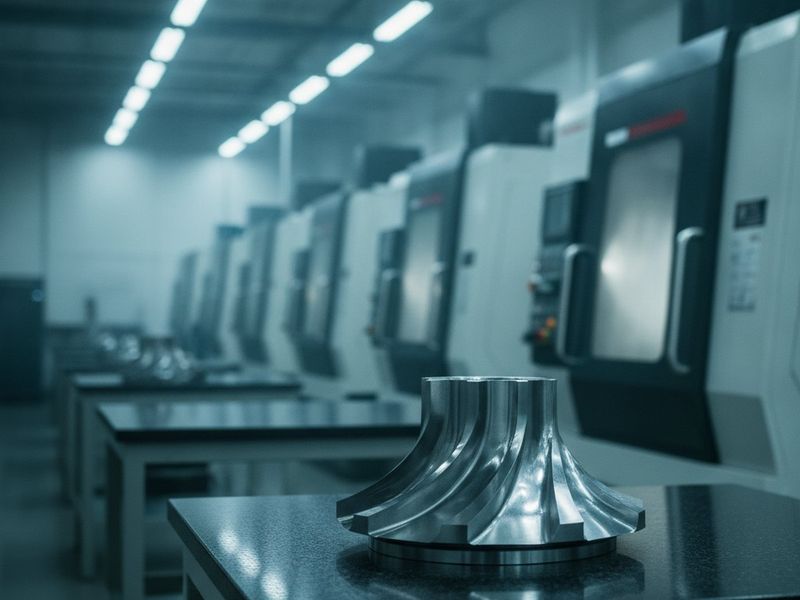

A machine shop floor with a CNC machine and a finished metal part on an inspection table in the foreground

How is it different from regular bookkeeping?

Accounting for manufacturing companies starts where regular bookkeeping stops. A service business sells hours. A manufacturer turns steel, resin or flour into something else, and the cost of that something is spread across purchase orders, timecards, utility bills, depreciation and rent. Half the value on the balance sheet is inventory in three stages, and it is only as right as the last count.

Each of those needs its own process, which is why a generic template leaves a plant’s margin drifting from reality within a quarter.

A job cost sheet beside a stack of timecards and a purchase order on a plant office desk

How should we set an overhead rate?

Total the indirect costs the floor really carries, such as rent, power, supervision, maintenance and depreciation, and divide by the driver that best tracks them, usually machine hours or direct labor hours. Review it at least yearly, and whenever you add a shift, a machine or a building.

We calculate the rate, book absorption every month and report the variance, so under- or over-absorbed overhead is a number you manage, not a surprise.

An electrical panel and a row of machines under high-bay lights with a utility meter in the foreground

How do I know which jobs and products make money?

Start from what the job was invoiced, subtract materials at actual cost, direct labor from timecards, absorbed overhead and any scrap or rework. What is left is contribution by job, and rolled up by customer and product line it is the number that should decide quoting, pricing and capacity.

Most plants that measure it for the first time find a product line they have been quoting below cost for years.

A plant manager and an accountant reviewing figures on a tablet beside a production line

When should a manufacturer hire a manufacturing CPA?

Before you buy the next major machine, before you take a second shift or a second building, and before your first sales tax audit. Each of those changes what you owe, what you can expense or must capitalize, and what your lender wants to see.

A CPA who works with New York manufacturers will also flag local specifics, from the ST-121 exemption on the equipment purchase to qualified manufacturer status and the 20% property tax credit.

A manufacturer and an accountant walking through a fabrication shop in conversation

Many Plants Run Two Shifts and Still Don’t Know What a Job Costs — Don’t Be One of Them

Manufacturing runs on cost. Materials bought months ahead; labor across shifts, overtime and setups; rent, power and depreciation that belong to every unit but sit in no one’s quote; inventory in three stages that is the biggest number on the balance sheet. Your production report shows what shipped. It does not show what it cost.

When all of that is booked from invoices and payroll alone, jobs are quoted at a guess, overhead hides until the variance hits, work in progress vanishes from the balance sheet, and New York exemptions and credits go unclaimed year after year. These are the four problems we see most often in plants across Rockland, Westchester, the Hudson Valley and the five boroughs.

Jobs quoted at a cost you never measured
Challenge 01
Quoted $14,200. Actual cost $16,900. Found out in March.
Overhead that lands in the wrong place
Challenge 02
Rent, power and supervision: $38,000 a month. Absorbed: half.
Work in progress nobody can value
Challenge 03
Half-built. Half-paid for. Fully invisible on the balance sheet.
New York exemptions and credits you never claimed
Challenge 04
Sales tax on the new press. 0% rate you didn’t elect.
01

Jobs quoted at a cost you never measured

Labor comes off timecards, materials off purchase orders and overhead off a rate someone set years ago. When they never meet on a job cost sheet, the quote is a guess and you learn which jobs lost money at year end.

02

Overhead that lands in the wrong place

Under-absorbed overhead flatters every job and every unit until the month-end variance hits the P&L in one line. Over-absorb and you turn down work you should have taken.

03

Work in progress nobody can value

Partially finished jobs carry real material and labor. Leave WIP unreconciled to production records and the count, and inventory, cost of goods and taxable income are all wrong at once.

04

New York exemptions and credits you never claimed

Production machinery, equipment and utilities can be bought exempt on Form ST-121. Qualified New York manufacturers pay a 0% state business income rate and get 20% of their property taxes back as a credit. Most plants we meet are claiming none of it.

How We Help Manufacturing Businesses in New York

True Job Cost and Absorbed Overhead Are the Difference Between Busy and Profitable.

Danzinger & Co. is a New City, NY CPA firm that keeps the books for manufacturers, fabricators, machine shops and food producers. We build your manufacturing accounting the way a plant actually runs — purchase order, receiving, job ticket, timecard, overhead, count, shipment, invoice — so every dollar ties out and every quote starts from what the last job really cost.

Here’s what we do for you:

  • Cost every job & unit

    Cost every job & unit

    Cost every job or unit with materials at actual cost, direct labor from timecards and absorbed overhead. Job cost sheets that close when the job ships, with estimate versus actual, so quoting starts from what the last job really cost.

  • Set & absorb overhead correctly

    Set & absorb overhead correctly

    Set an overhead rate that reflects your floor, absorb it every month and report the variance. Rent, power, supervision, maintenance and depreciation allocated on machine or labor hours, reviewed every year and every time you add capacity.

  • Value inventory & WIP

    Value inventory & WIP

    Value raw materials, work in progress and finished goods at true cost, reconciled to counts and production records. Three inventory stages tied to the books, cycle counts between year-end observations, and the uniform capitalization calculation for tax.

  • Claim ST-121 production exemptions

    Claim ST-121 production exemptions

    Claim New York sales tax exemptions on production machinery, equipment, parts, tools and utilities with Form ST-121. Certificates set up with vendors, purchases reviewed for exempt versus taxable use, and utility studies where production is metered separately.

  • Secure qualified manufacturer status

    Secure qualified manufacturer status

    Test and claim qualified New York manufacturer status: the 0% business income rate and the 20% real property tax credit. Receipts and property tests run every year, CT-641 or IT-641 filed, and the credit tracked against the plant’s property tax bills.

  • Plan equipment purchases & depreciation

    Plan equipment purchases & depreciation

    Plan equipment purchases around Section 179, bonus depreciation and financing so the tax benefit lands in the right year. The timing of a press or a CNC purchase can move a six-figure deduction between years; we model it before you sign.

  • Run payroll & labor reporting

    Run payroll & labor reporting

    Run payroll for shifts, overtime and shop labor, and report labor cost by job, department and hour. Payroll tax filings, MCTMT for downstate plants, and labor coded so job costing and overhead absorption use the same numbers.

  • File New York State & federal returns

    File New York State & federal returns

    Handle New York State and City filings, the research credit and the entity returns behind your plant. Corporate, partnership and LLC returns, quarterly estimates, Section 41 research credit studies and the compliance calendar for every registration.

Hover over a card to read moreTap a card to read more

Who We Serve

Our accounting services for manufacturers are built around how each kind of plant makes, costs and ships.

Machine shops and job shops. Every job is different, so quotes need real labor and machine-hour data behind them, and contribution needs to be tracked by job and customer.

Fabricators. Steel and other materials, scrap, remnants and rework all affect margin, and overhead is best absorbed by machine hour.

Food and beverage producers. Batch production, yield loss and lot-level inventory across raw materials, work in progress and finished goods call for costing that follows each batch.

Assembly operations. Many components and labor spread across stations make standard costs, variances and rework tracking essential to knowing your real margin.

Beyond Bookkeeping: Manufacturing Tax Services, Planning and Financial Support

Accurate job costs are the starting point. When one team handles your manufacturing financial services, costing, tax and planning all work from the same numbers.

Our manufacturing bookkeeping services cover the monthly close, job costing, overhead absorption, WIP and inventory reconciliation, and financial statements built for a plant. Our manufacturing tax services handle ST-121 exemption support, qualified New York manufacturer filings, and New York State and City returns.

Good manufacturing tax planning happens before you buy the machine, add the shift or sign the lease. That means timing equipment purchases, deciding what to expense or capitalize, and protecting the benefits you qualify for. When you’re adding capacity, pricing a large contract or preparing for a lender, our CFO services add forecasting, budgeting and margin analysis by product line.

How It Works

  1. 01

    Strategy call. Tell us what you make, how many people are on the floor and how you quote work today. We’ll show you where overhead, WIP and unclaimed New York credits may be affecting margin.

  2. 02

    Setup and cleanup. We connect your purchasing, timecard, inventory and accounting data, bring past periods current, and build your job costing, overhead rate and WIP process.

  3. 03

    Monthly close and review. You receive job-level financials with variances, and a senior accountant walks you through what changed and which tax moves to consider before year-end.

Why Choose Danzinger & Co. for Your Manufacturing Accounting

We know New York manufacturing

ST-121 production exemptions, qualified New York manufacturer status and the 0% rate, the 20% real property tax credit, MCTMT, Excelsior: we file these for plants across Rockland, Westchester and the Hudson Valley every year.

You talk to a senior accountant

No junior hand-offs. The person who understands your overhead rate is the person who answers when you call.

Flat, predictable pricing

You know the cost before the work starts, and it doesn’t jump because you added a second shift.

Stop Guessing Which Job Makes Money. Call Us First.

One conversation is usually enough to see where overhead, WIP and unclaimed New York credits are eating your margin. Call (347) 410-1839 or send us a note below.

Book a Strategy Call

Manufacturing Accounting FAQ

Is manufacturing equipment exempt from sales tax in New York?

Some manufacturing equipment may qualify for a New York sales tax exemption if it is used directly and predominantly in production. The exemption depends on how the equipment is used, so manufacturers should keep clear purchase records, exemption certificates, and documentation supporting the equipment’s production use.

What is a qualified New York manufacturer and what does it save?

A qualified New York manufacturer is a manufacturer that meets specific New York tax requirements related to its property and manufacturing activity in the state. Qualified manufacturers may benefit from New York tax advantages, including a 0 percent business income tax rate for eligible corporate taxpayers and reduced fixed dollar minimum tax amounts.

Should we use job costing or process costing?

Job costing is usually best when you produce custom orders, projects, or batches with different costs. Process costing is usually better when you manufacture large volumes of similar products through a consistent production process. Danzinger & Co. can help you choose the right costing method based on how your production, materials, labor, and overhead actually flow through the business.

How should we value inventory and work in progress?

Inventory and work in progress should be valued using a consistent method that captures direct materials, direct labor, and applicable manufacturing overhead. Accurate inventory accounting helps you understand margins, price products correctly, prepare reliable financial statements, and avoid surprises at tax time.

We want to hear from you!

Tell us what you make and how many people are on the floor, and we’ll show you what a job-level P&L looks like. Fill out the form and a senior accountant will reply within one business day.

“Our business isn’t a typical one. We offer several services across different entities, use multiple pricing models, and manage a large international team. Danzinger & Co. took the time to truly understand how we work and built an accounting structure that fits our organization. As a result, our financials accurately reflect our business, with revenue recognized correctly and reports we can confidently rely on when making operational and growth decisions. It’s refreshing to work with an accounting firm that goes beyond bookkeeping and takes the time to understand the business behind the numbers.”

MP
Mendy PelmanOwner, Ultimate UW

“I’ve known Moshe for over two decades, and his team handles the books for all of my entities. In ten-plus years they’ve never let me down. I don’t have to think about it, which is exactly what you want from the people managing your finances. Couldn’t ask for a better partner.”

NZ
Neiv ZiarnoMulti-Entity Business Owner
5.0 ★★★★★Read reviews
Inquiry received! We'll be in touch shortly to schedule your free consultation.